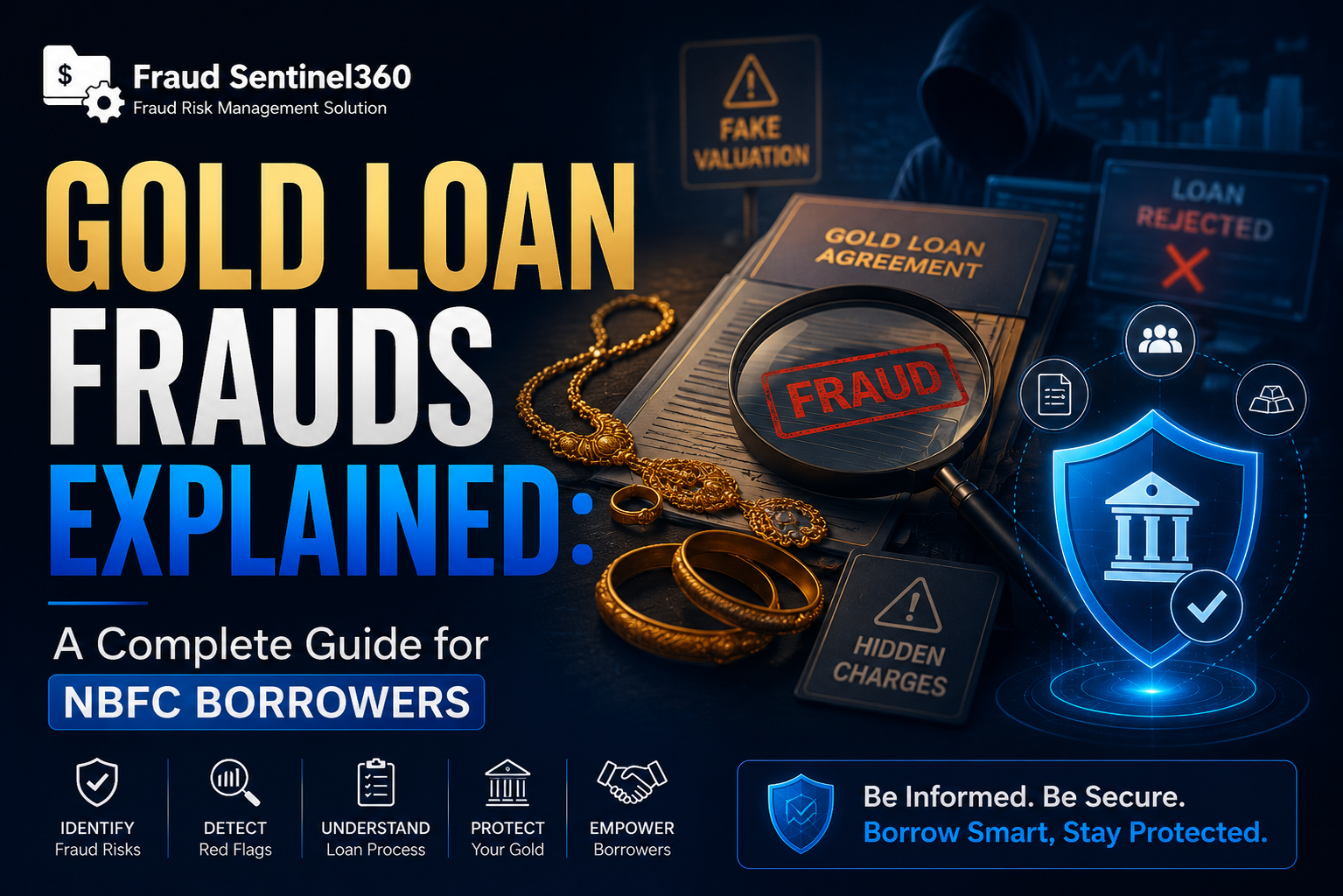
Gold loans are one of the fastest and most trusted ways for individuals and small businesses in India to raise money against their jewellery. Because the process is quick and the collateral is physical, most borrowers assume there is little that can go wrong. In reality, the gold loan process has several points where borrowers can be misled, overcharged, or defrauded — sometimes by rogue individuals, and occasionally through weaknesses in a lender’s own controls. This guide breaks down how gold loan frauds happen, the warning signs to watch for, and the practical steps that protect both your gold and your money.
Why Gold Loan Fraud Deserves Attention
A gold loan is a secured loan: you pledge jewellery or coins, the lender values them, and you receive a percentage of that value as a loan. The simplicity is exactly what fraudsters exploit. The borrower is often in a hurry, may not know the current market rate of gold, and rarely gets to watch every step of the valuation. Small manipulations at any stage — the weighing, the purity check, the paperwork, or the final settlement — can quietly cost the borrower a significant amount.
For NBFCs, the stakes are just as high. A single dishonest branch employee or a batch of spurious pledges can translate into real financial loss, regulatory scrutiny, and reputational damage. Understanding the fraud patterns is the first step to preventing them on both sides of the counter.
Common Types of Gold Loan Fraud
1. Fake or Manipulated Valuation
The value of your loan depends entirely on how much your gold is judged to be worth. Fraud here takes two forms. In the first, a borrower’s genuine gold is undervalued — the appraiser understates the weight or purity so the borrower receives less than they should. In the second, an insider colludes with a borrower to overvalue gold (or value gold that is impure or fake), inflating the loan against collateral that cannot cover it. Both distort the true loan-to-value ratio that the whole product depends on.
2. Spurious or Low-Purity Gold Pledged as Genuine
Fraudsters may pledge gold-plated items, low-carat alloys, or outright counterfeit ornaments as high-purity gold. Where purity testing is weak or an appraiser is complicit, the lender ends up holding collateral worth far less than the amount disbursed. This is one of the most damaging fraud types for NBFCs because it can be repeated across many small loans before it is detected.
3. Hidden Charges and Opaque Terms
Some of the most common borrower complaints are not about outright theft but about costs that were never clearly disclosed: processing fees, valuation charges, high or compounding interest, storage or locker fees, and steep penalties for late payment or foreclosure. When these are buried in fine print, the effective cost of the loan can be far higher than the headline rate suggested.
4. Tampering With Pledged Gold in Storage
Once your gold is stored, you lose direct sight of it. In rare but serious cases, pledged ornaments are swapped for lighter or lower-purity substitutes, or portions are removed. Borrowers usually discover this only at the time of repayment and release — which is why the release process deserves as much attention as the disbursal.
5. Unauthorised Auction or “Loan Rejected” Manipulation
If a borrower misses payments, the lender may auction the gold to recover dues. Fraud occurs when auctions are conducted without proper notice, below fair value, or to connected parties, denying the borrower the surplus they are owed. Separately, some borrowers report being told a loan was “rejected” or closed while charges continued to accrue — a sign of poor records or deliberate misrepresentation.
6. Identity and Documentation Fraud
Loans taken against stolen jewellery, or in someone else’s name using forged identity documents, harm the true owner and the lender alike. Weak Know Your Customer (KYC) checks make this easier, which is why identity verification is a frontline defence, not a formality.
Red Flags Every Borrower Should Recognise
- The appraiser weighs or tests your gold out of your sight, or refuses to show the reading on the scale.
- You are not given a clear, itemised receipt listing each ornament, its weight, and its assessed purity.
- The interest rate, processing fee, or penalty terms are explained vaguely or “will be shared later”.
- The offered loan amount is far below what the current gold rate and your quantity would suggest.
- You are pressured to sign blank or incomplete documents, or to accept terms without reading them.
- The lender is not a registered bank or RBI-regulated NBFC, or cannot show proper registration.
- There is no transparent, written policy on how and when pledged gold can be auctioned.
Understanding a Safe Gold Loan Process
A trustworthy gold loan should be transparent at every stage. Knowing what “good” looks like makes it far easier to spot when something is off.
- Valuation in your presence: weighing and purity testing should happen where you can see them, with the readings shown to you.
- A detailed pledge receipt: every item, its weight, purity, and the agreed loan value should be documented and handed to you.
- Clear, written terms: interest rate, all fees, tenure, repayment schedule, and foreclosure and auction terms should be disclosed up front in writing.
- Secure, insured storage: reputable lenders store pledged gold in insured vaults with tamper-evident packaging and proper records.
- A defined release process: on full repayment, your exact ornaments should be returned, and you should verify weight and condition before leaving.
How to Protect Your Gold and Your Money
- Borrow only from regulated lenders. Choose an RBI-regulated bank or NBFC and confirm their registration before pledging anything.
- Know your gold’s value first. Check the current market rate and have a rough idea of your ornaments’ weight and purity before you walk in.
- Watch the valuation. Insist on seeing the weighing and purity test, and get the readings recorded on your receipt.
- Read every term. Understand the interest rate, all charges, the repayment schedule, and exactly what happens if you miss a payment.
- Keep your paperwork. Retain the pledge receipt, loan agreement, and every payment record until your gold is safely returned.
- Verify at release. When you repay and collect your gold, check the ornaments, weight, and purity against your original receipt before you leave.
- Never sign blank documents. Fill in or strike out blanks, and never accept “we’ll complete it later”.
What This Means for NBFCs
For lenders, gold loan fraud is not only a borrower-protection issue — it is a core operational and compliance risk. Manipulated valuations, spurious collateral, insider collusion, and identity fraud can accumulate quietly across thousands of small-ticket loans. Strong defences combine disciplined KYC, standardised and supervised valuation, tamper-evident storage with reconciliation, and continuous monitoring that can flag unusual patterns early — before isolated incidents become systemic losses.
Transparency protects everyone. When borrowers can verify each step and lenders can detect anomalies in real time, trust stops being a matter of faith and becomes a matter of evidence.
Conclusion
Gold loans remain a genuinely useful and accessible form of credit. The risk is not the product itself but the gaps — in disclosure, valuation, storage, and monitoring — where fraud can take root. Borrowers who understand the process, recognise the red flags, and insist on transparency put themselves in a strong position. And lenders who build verification and early detection into every stage protect their customers, their balance sheets, and their reputation at the same time. Being informed is the first and most important safeguard.